La pulpotomía es un tratamiento que se hace en dientes de leche cuando una caries profunda llega a la pulpa, la parte interior del diente conocida como «nervio». Consiste en retirar solo la pulpa afectada de la corona para conservar el diente sano hasta que se caiga de forma natural. It's done under local anaesthetic, so it doesn't hurt.
What Is a Pulpotomy
Inside every tooth there is soft tissue containing nerves and blood vessels: the pulp. It fills the crown (the visible part) and extends down into the roots.
In a pulpotomy, only the pulp in the crown, which is the inflamed part, is removed. The pulp in the roots, which is still healthy, is kept. A material is then placed to protect what remains and the tooth is sealed.
When Is It Needed
It's recommended when decay has progressed so far that, once cleaned out, it reaches the pulp. It may also be needed after a knock that leaves the pulp exposed.
In these cases a filling isn't enough, because the infection would keep spreading. Without treatment, the tooth can become painful, develop an abscess and end up being lost early.
At wiloo, we specialise in children's dental health. Find out how we work in paediatric dentistry and prevention.
What the Appointment Involves, Step by Step
- Local anaesthetic in the area, applied gently while explaining each step to your child.
- Isolating the tooth to keep the area clean and dry.
- Removing the decay and the pulp in the crown.
- Placing a medicated material over the pulp in the roots.
- Restoring the tooth, often with a preformed crown, which is the longest-lasting option for baby molars.
It's usually done in a single 30-45 minute appointment.
Does It Hurt?
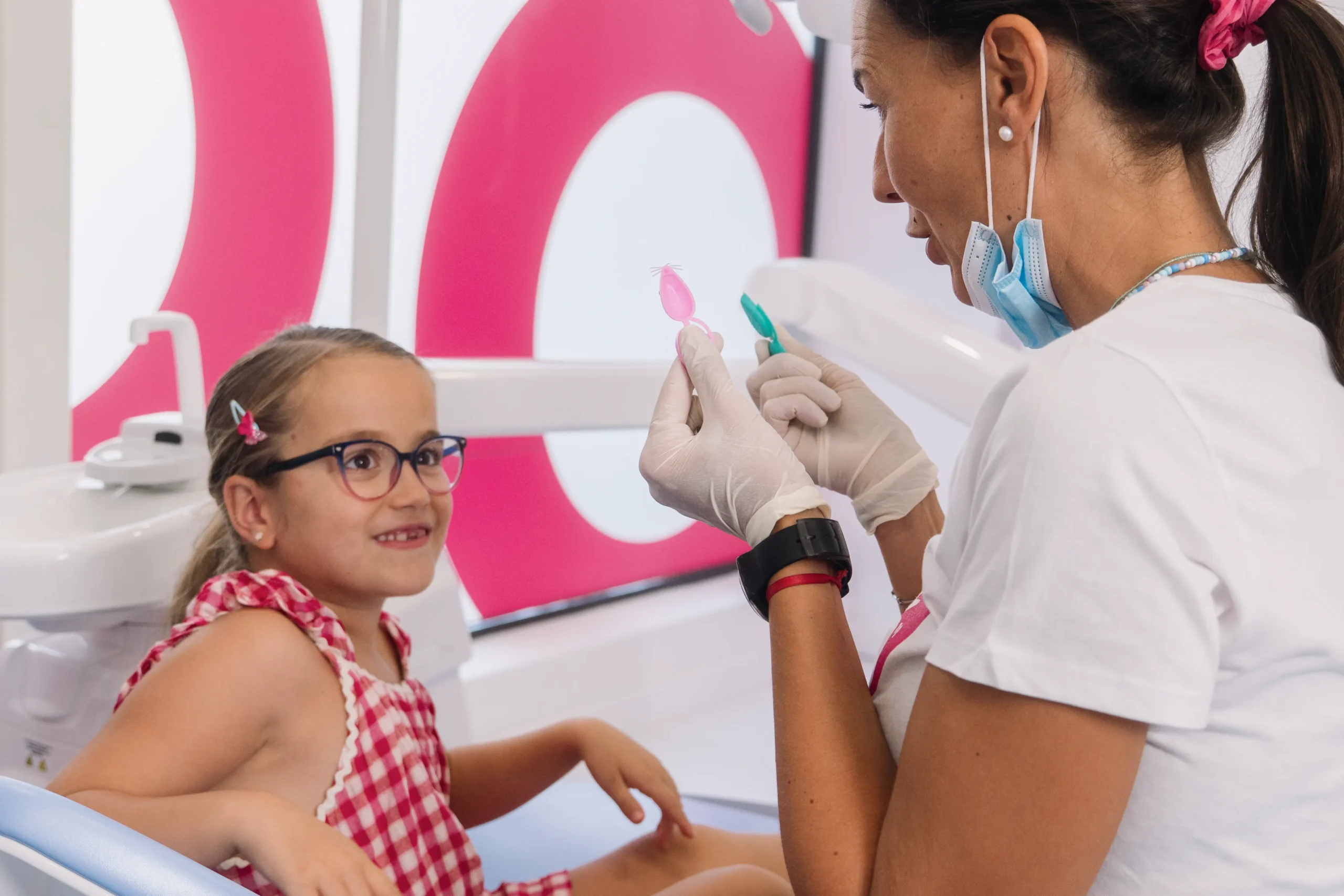
No. With local anaesthetic your child won't feel pain during treatment, just some pressure. In paediatric dentistry we work at their pace and explain everything in words they understand, so they stay calm.
Once the anaesthetic wears off they may feel slight discomfort for a few hours, which can be managed with their usual pain relief if the paediatric dentist recommends it.
Pulpotomy vs Pulpectomy: The Differences
| Pulpotomy | Pulpectomy | |
|---|---|---|
| What is removed | Only the pulp in the crown | All of the pulp, including the roots |
| When it's recommended | The pulp in the roots is healthy | The infection has reached the roots |
| Adult equivalent | No direct equivalent | Similar to a root canal |
Aftercare
- Don't eat until the anaesthetic has worn off, to avoid biting the lip or cheek.
- Stick to soft food that day.
- Brush as normal, taking care around the treated area.
- Call the clinic if there is severe pain, swelling or if the restoration comes loose.
Frequently Asked Questions
Why treat a baby tooth if it's going to fall out?
Because it keeps the space for the permanent tooth, allows proper chewing and prevents pain and infection. Some baby molars don't fall out until age 10-12.
How long does a tooth with a pulpotomy last?
If the treatment goes well, the tooth usually lasts until it falls out naturally. We'll check it at regular visits.
Does it need a crown afterwards?
On baby molars, a preformed crown is the most common choice because it protects the tooth and lasts longer than a large filling.
Have questions about your child’s dental health?
Come and meet us at our clinics in Terrassa, Girona, Torrent and Vic. Your first visit is free.