A child breathes through the mouth when air doesn't flow easily through the nose or when the palate is narrow. If it goes on for a long time, it influences how the face and teeth grow. While your child is still growing it is simple to guide, and at age 5 we can already see whether their mouth has the room it needs.
How to tell if your child breathes through the mouth
With a cold, we all breathe through our mouths for a few days, and that's normal. What's worth looking at is when it becomes the usual thing. These are the signs you can spot at home:
- They sleep with their mouth open.
- They snore or breathe noisily at night.
- Their mouth stays slightly open while they play or watch TV.
- Their lips are often dry.
- They wake up tired even after a full night's sleep.
If you recognise several, don't worry: it's one of the cases we see most often and, looked at in time, it has a simple solution.
Why your child breathes through the mouth
There are usually two reasons, and they often go together:
- The nose. Frequent colds, allergies or enlarged adenoids make it harder for air to pass. That's a matter for the paediatrician or the ENT specialist.
- The mouth. A narrow palate leaves little room for air and forces a child to breathe through the mouth. That's what we look at.
Sometimes the cause has gone and what's left is the habit. And if your child has used a dummy for a long time or sucks their thumb, it's worth reading how dummies and thumb sucking affect teeth.
How it affects the face and teeth
With the mouth closed, the tongue rests up against the palate and naturally widens it as your child grows. With the mouth open, the tongue sits low and the palate loses that help.
This is what we then see in the clinic:
- A narrow palate, with little room for the adult teeth.
- A crossbite: the upper back teeth bite inside the lower ones.
- Changes in the way the face grows.
- Less restful sleep.
And it's a circle: a narrow palate lets less air through, which leads your child to open their mouth more. That's why gaining width in time, while the bone is still growing, helps so much.
What we do at wiloo when a child breathes through the mouth
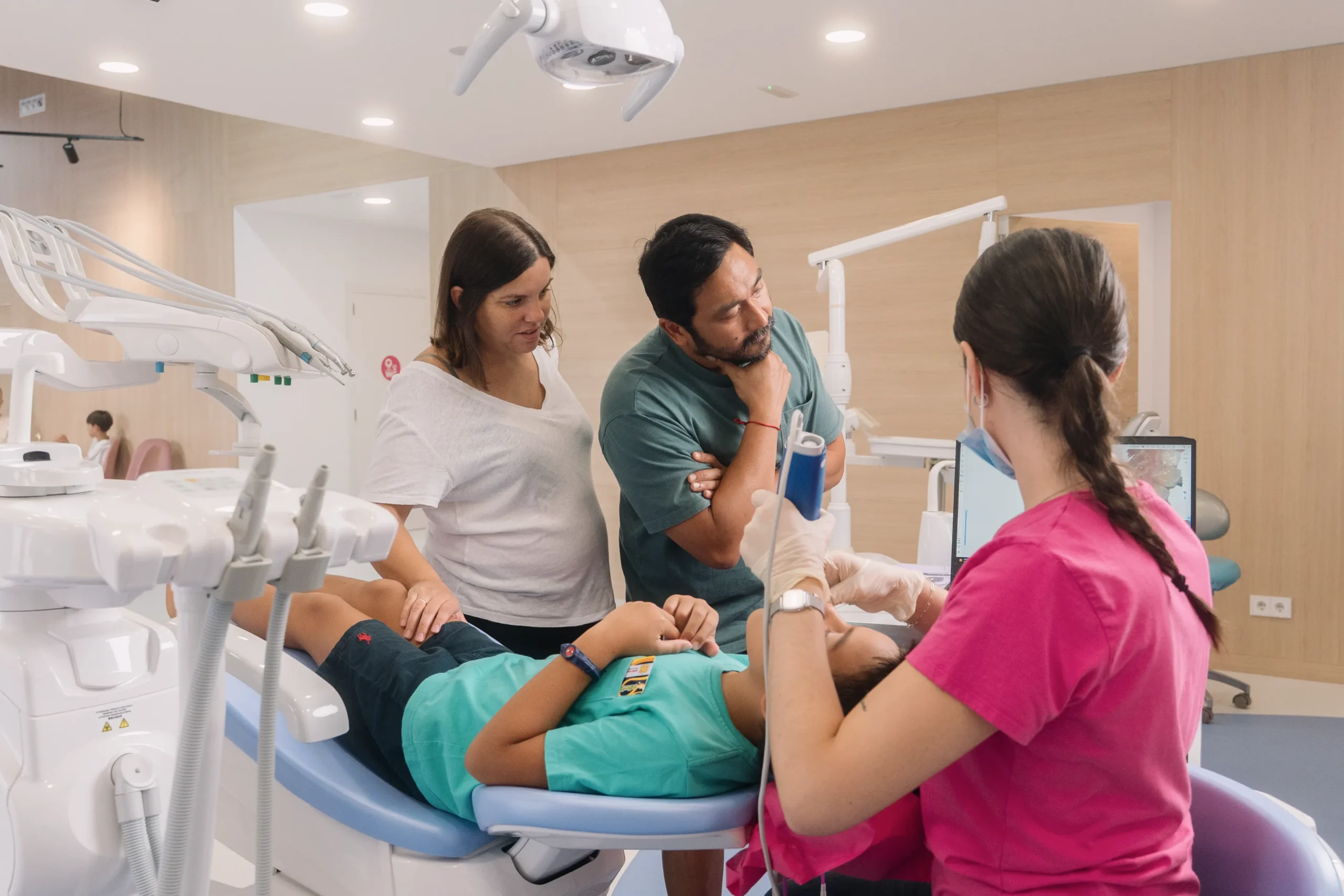
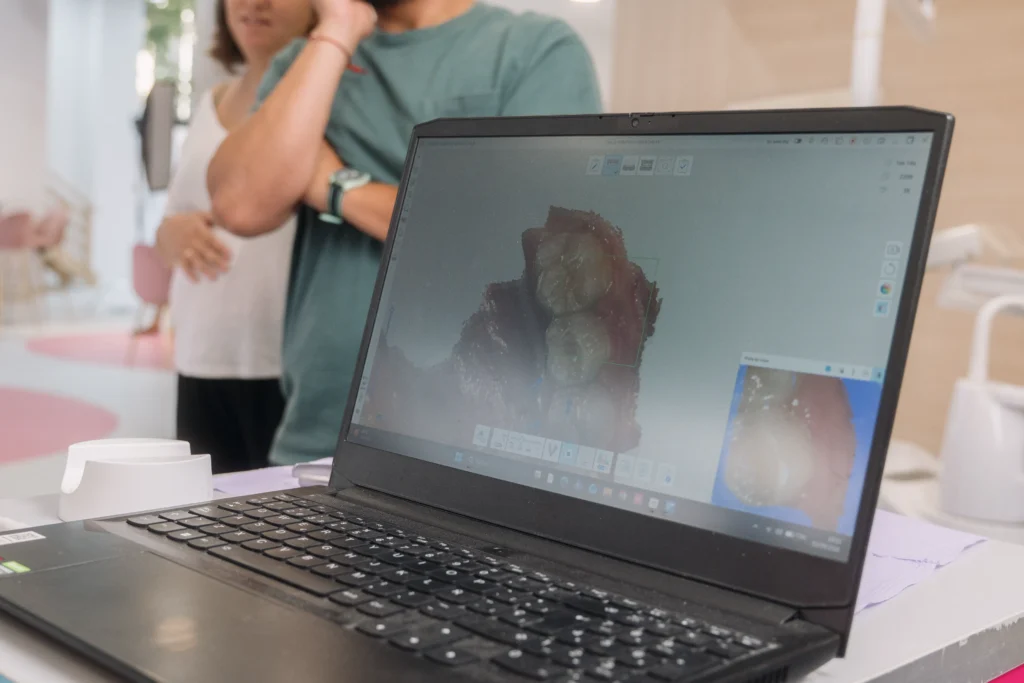
We have more than 40 years of experience in children's dental health. At the first visit we check three things: whether there are cavities, whether there is room for the new teeth and how the mouth works, that is, how your child breathes, swallows and bites. We show you everything on screen.
If the palate is narrow, between the ages of 5 and 9 we treat it with growth guidance: a fixed appliance, custom-made from a digital scan, that sits on the inside and can't be seen when your child smiles. It widens the palate and makes room for the adult teeth and, depending on the case, includes an aid to help the tongue rest in the right place.
Treatment lasts between 12 and 18 months, with check-ups roughly every 2 months. It does not hurt: the first 2 or 3 days are for getting used to it, and after that your child carries on as normal.
And 3 out of 4 children don't need braces afterwards.
When the cause also lies in the nose, we coordinate with your child's paediatrician or ENT specialist.
You'll find all the details on our page about children's orthodontics.
Frequently Asked Questions
Is it normal for my child to sleep with their mouth open?
During a cold, yes. If it's the usual thing, it's worth having it checked: it usually means air isn't flowing well through the nose or the palate is narrow. We'll look at it with you at the first visit.
Does mouth breathing change the shape of the face?
It influences how the face grows: the palate tends to stay narrow and the face follows. While your child is growing this can be guided, which is why we carry out the first growth check at age 5.
At what age is mouth breathing treated?
Growth guidance is carried out between the ages of 5 and 9, depending on how the change of teeth is going. If your child is younger, you can still come: we see children from babyhood.
Should I take my child to the paediatrician or the dentist?
Both. The paediatrician or ENT specialist looks at the nose; we look at the mouth and palate. And we coordinate with them.
We'll look at it with you at the first visit
If your child sleeps with their mouth open or breathes through the mouth during the day, we'll show you on screen whether their palate has the room it needs. Come and meet us at our centres in Terrassa, Girona, Torrent and Vic. The first visit is free.